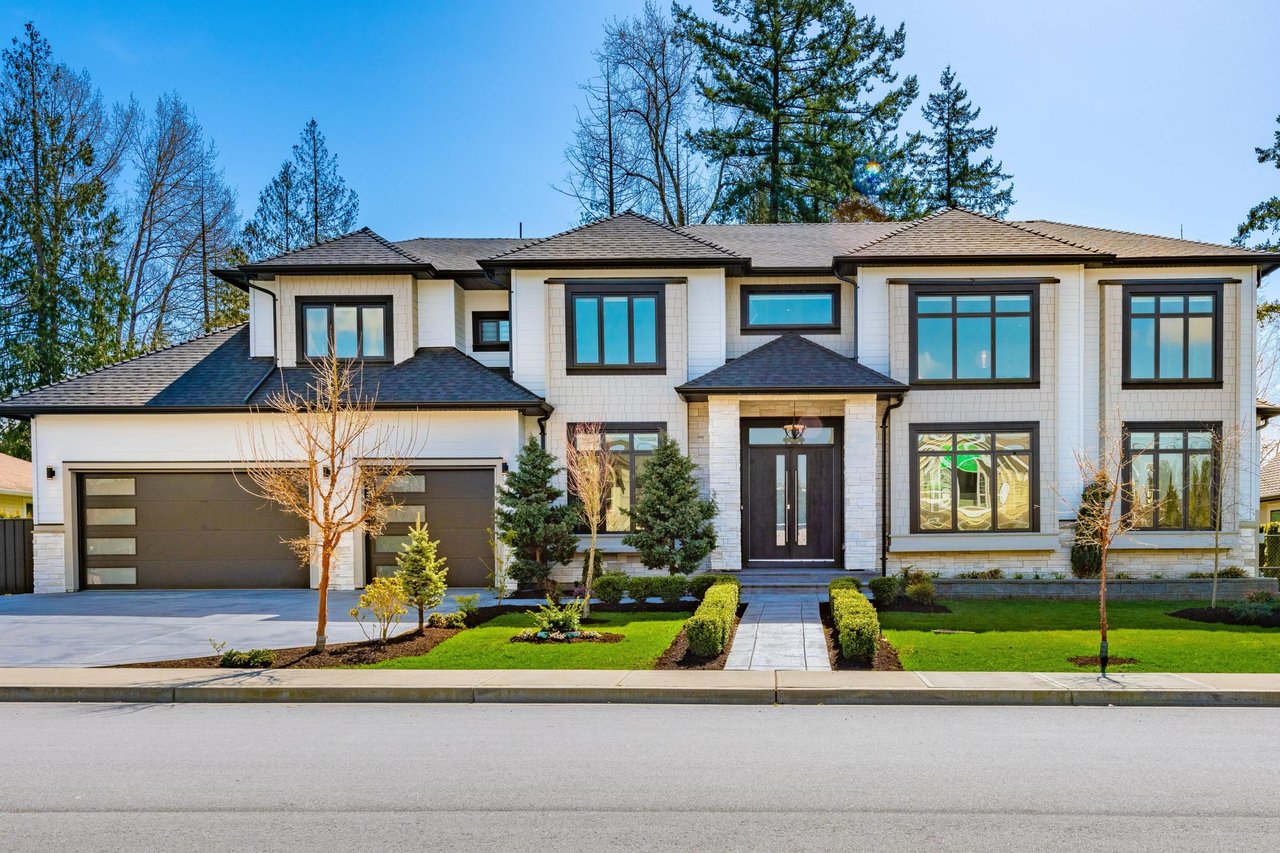
If you own a resale home in Fishers priced between $400,000 and $600,000 and you're planning a summer or fall listing, the citywide median is going to lie to you. Not on purpose. It's just averaging together three groups of homes that no longer behave the same way.
A seller sitting on a 2016-built four-bedroom in a mature Hamilton Southeastern subdivision is not competing with the Geist waterfront tier or the entry-level townhome tier. That seller is competing with a Fischer Homes inventory home two miles away that just took a $6,850 price cut and a builder-paid rate buy-down. Which is a very different problem than the "homes sell in 20 days" headline suggests.
Veteran local agents have started describing Hamilton County as almost three separate real estate markets, with Carmel running hot, the higher-value Fishers tier moving fast, and the middle band facing real pressure from new construction inventory. That framing is the single most useful lens for any Fishers seller reading market reports this summer.
Four medians, four different stories
Look at what the major data sources are publishing right now for Fishers:
| Source | Metric | Value | Time window |
|---|---|---|---|
| Redfin | Median sale price | $427K, up 1.7% YoY | 3 months ending May 2026 |
| Houzeo | Median sale price | $428,750, up 7.19% YoY | June 2026 |
| Movoto | Median list price | $459K, down 5% YoY | July 2026 |
| Zillow ZHVI | Average home value | $411,125, up 0.7% YoY | May 2026 |
Every one of those numbers is defensible. They measure different things across different windows. The point isn't that one is right. The point is that a single median for a city where the same three-month window shows a subdivision like Avalon of Fishers up 29.1% year over year on a $430K median, while the citywide sale-to-list ratio holds at 98.89% with 21% of homes going over asking, is telling you nothing specific about your street. It's telling you that Fishers, on average, is fine.
That's true. It's also not actionable.
The friction sellers keep missing
Here is what shows up in transactions right now for the middle tier.
The Fishers MLS is carrying roughly 73 new-construction listings with an average of 89 days on market and a median list of $459,995, at about $200 per square foot. That is more days on market than the resale side, but builders don't measure success in DOM. They measure it in absorption at a target margin, and they use two levers a resale seller cannot match:
- Builder-paid rate buy-downs, which lower the buyer's effective monthly payment by hundreds of dollars without a headline price cut
- Recurring price adjustments on standing inventory, visible on active listings from Lennar, Pulte, Taylor Morrison, and Fischer Homes across the 46037 and 46040 zips
A buyer sitting at $525,000 with a pre-approval at 6.7% can walk into a new build and get shown a 5.49% rate for the first two years, or a permanent buy-down to 5.99%, on a home that is finished, warrantied, and inside the same school boundary as your 2015 resale. Your listing has to compete with that offer, not with the last comp on your street.
That is the mechanism the citywide 98.89% sale-to-list ratio hides. Sellers who priced against the median in the middle tier are the ones showing up in the "price cut" column, which sat at 43.78% of Fishers listings in June 2026.
The three submarkets, drawn from the data
Entry tier, under $400K
Thin. New construction at this price point is mostly attached product and smaller footprints, and the resale side turns over quickly when it appears. Zillow's ZHVI at $411,125 and a five-day pending window is really a story about this tier. If you own here, your problem is not competing with builders. Your problem is that there is very little for your buyer to move up into without stretching. Price-to-list is aggressive and multiple offers still happen.
Middle tier, $400K to $600K
The pressure zone. This is where the builder inventory sits, where price cuts cluster, and where days on market stretches when the listing is even slightly ahead of comps. It is also where most move-up families in central Indiana are actually shopping. If you own a 2010s-era four-bedroom in Sunblest, Weaver Woods, Rosewood, Summerlin Trails, or Springs of Cambridge, this is your tier. Fair warning: those specific neighborhoods are also on the city's 2026 street resurfacing list running through fall, per the WISH-TV construction roundup published June 13, 2026, which means showings during your window may run past cones and closed lanes.
Upper tier and Geist
Still moving. Higher-value Fishers homes and Geist Reservoir properties are the segment agents describe as "flying." Inventory is limited, buyers at this price point are less rate-sensitive, and builder incentives are largely irrelevant because custom and semi-custom product doesn't discount the same way. Avalon of Fishers posting a 29.1% year-over-year median gain on tiny sales volume through May 2026 is a signal about what happens when limited premium supply meets steady demand, not a citywide trend.
The demand map is being redrawn this year
None of the three tiers exists in a vacuum. Where the jobs and amenities are getting built shifts which subdivisions feel "close to everything" a year from now.
Two big employer and destination moves are the ones to track:
- Fishers District Phase 6, announced June 10, 2026 as a $169 million expansion, will bring JD Finish Line's North American headquarters and the 180,000 square-foot Fishers Fieldhouse, which breaks ground fall 2026 and is expected to open late 2027 or early 2028 as the practice HQ for the Indy Ignite alongside the existing Fishers Event Center, per WISH-TV's reporting.
- Andretti Global's 575,000 square-foot headquarters on 90 acres beside the Indianapolis Metropolitan Airport and the Nickel Plate Trail is a $200 million project projected to bring up to 500 jobs, per the City of Fishers Next Chapter plan.
Add the November 2025 opening of the Fishers Community Center and the Nickel Plate Trail's continued build-out south toward 96th Street, and the pull of gravity in the city is moving. Homes with a short walk or bike ride into the Nickel Plate District already command a premium. That premium is likely to widen, not compress, over the next 24 months.
Then there is the 2026 construction calendar itself, which matters more for sellers than most people admit because it dictates showing patterns:
- USA Parkway widening from 106th Street north to IKEA, summer through fall 2026
- 96th Street and Cyntheanne Road roundabout, full intersection closure with August 2026 completion
- Allisonville Road and 116th Street corridor work, completion October 2026, with lane and turn restrictions
- 136th Street improvements, completion fall 2026
If your home sits inside one of those corridors, buyer traffic timing matters. A Saturday showing that requires a ten-minute detour reads as "hard to get to" whether or not the road opens next quarter.
If you're selling in the middle tier
Three practical shifts change outcomes here.
Price against the specific subdivision and the specific finish tier, not the citywide median. Comp work at this price point has to weight new-construction inventory within a two-mile radius. If three builders are running rate buy-downs, that is your competition, not the last resale on your street from 2024.
Presentation earns the delta. With sale-to-list at 98.89% and 21% of homes still selling over asking, the listings that win are the ones that arrive photograph-ready and priced correctly on day one. Days-on-market compounds against a seller in the middle tier faster than in either adjacent tier, because the builder alternative is always sitting there.
Time the calendar around infrastructure noise. February through July has historically been the strongest listing window in Fishers, and the summer 2026 road work argues for finishing showings before the fall closures on 96th and Cyntheanne, and before Allisonville throttles down for its October completion push.
Quick answers
Is Fishers a buyer's market or a seller's market right now? Neither cleanly. Under 0.62 months of supply and a 98.89% sale-to-list ratio in June 2026 read like a seller's market. But 43.78% of listings had a price cut in that same month, and the middle tier competes directly with builder incentives. The market is segmented, not one-directional.
Do builder rate buy-downs actually move buyers away from resale? Yes, at the $400K to $600K price point in particular. A two-year rate buy-down can cut a buyer's early monthly payment enough to shift what they can qualify for, and it is not a lever a resale seller can match without a genuine price concession.
What about the higher end near Geist? Different market. Limited inventory, less rate sensitivity, and premium subdivisions posting outsized year-over-year gains on low sales volume through spring 2026. Pricing strategy there is a comp-and-condition question, not a builder-competition question.
Should I wait for rates to fall? Rates have been sitting in a 6.4% to 6.9% band, and the local consensus does not project a sharp move down. Waiting exposes a middle-tier seller to a full year of continued builder inventory in the same price band. That is a real cost, not a hypothetical one.
If you want a read on which of the three tiers your specific home sits in, and what a defensible list price looks like against both the resale comps and the builder inventory on your side of Fishers, Reggie Jackson and the team are happy to walk your home in person and put numbers on paper. Schedule your free neighborhood consultation and we'll build the strategy around your street, not the citywide median.